Motocyclopedia is site devoted to organizing and categorizing motorcycle models from around the world.

Sunday, May 3, 2009

New Standards part V

In the mid nineties there was a number of half-faired V-twin sport bikes that filled American showrooms. In the early years of World SuperBike racing Ducati forged a road racing empire with their famous 90 degree V twins. As Ducati's popularity grew the Japanese took notice. Not that any of the Japanese makers were have trouble selling their inline four sportbikes, they were very popular, but they may have wanted to hedge their bets with V-twins of their own.

Suzuki attacked the market with the TL1000S. In 1997 the liquid cooled 90 degree V-twin offered an alternative to their ever popular GSX-R750. The TL gained a following however due to a number of suspension problems the Suzuki found a reputation for being a deadly motorcycle and sales dropped. The TL also came in a repli-racer style with the TL1000R, which lasted one year after the TL1000S. The TL's V-twin lived on in Suzuki's SV1000, however this model never seemed to be very popular.

The same year Suzuki came out with the TL Honda introduced their own V-twin, the VTR1000F otherwise known in the US as the SuperHawk. Like the Ducati and Suzuki the VTR featured a 90 degree twin. A unique feature of the VTR was the split side mounted radiators. The VTR never seemed to catch on in the US. In 2000 Honda was the first and only Japanese competitor to seriously take on Ducati with their own WSB V-tiwn, the VTR1000R, which shared little with the VTR1000F.

While Honda and Suzuki had offered liquid cooled 90 degree V-twins, they never really lived up to Ducati's racey 916. Instead the TL and VTR found themselves competing with Ducati's less sport Super Sport model. The Super Sport model featured an air cooled 900cc twin that traces its roots the mid eighties. This bike was far from offering the Superbike performance of the 916, but price wise and style wise it competed with the TL and VTR nicely.

Friday, May 1, 2009

New standards part IV timelines

When trying to categorize these motorcycles it helps to sort out the various terminology associated with them, if only for my sake.

Standard motorcycles: Feature an upright, "sit up and beg" riding position. High mounted handle bars and foot pegs that are directly below the rider's butt create this position. Standards usually don't have much if any wind protection or luggage capacity. Example - Suzuki Bandit

Streetfighters: The term streetfighter came from the 1980's and 1990's shortly after the introduction to plastic wrapped repli-racer sportbike riders. A rider would crash, and rather than replacing the platic fairing, the owner would customize the bike giving it a tough new look. Example - Aprilia Tuono

Hooligan bikes: Hooligan bikes might as well be interchangeable with streetfighters. A hooligan bike is any motorcycle that can easily perform stunts such as wheelies and stoppies. Example - Triumph Speed Triple

Cafe racers: Back in the 1950's and 1960's pretty much every motorcycle would be considered a standard. In Britain it was popular for motorcyclists to modify their bikes (clip-on handlebars, high mounted footpegs, etc) and race their machines from one cafe to the next. Example - Triumph Thruxton

Naked bikes: A naked bike is any motorcycle without a wind protection of a fairing. Example - Ducati Monster

As you can see some bikes fit in one or more categories, they are not mutually exclusive and they do not necessarily mean the same thing. For example a streetfighter is always naked, but not all naked bikes are streetfighters. The lines and identification for all these bikes is often very blurry, so don't take anything to seriously.

First lets get the "old" standards out of the way.
Then there's the "new" standards that I've been going on about.
Finally the smaller versions of the new standards.

New standards part III

Over the years a number of exotic naked bikes have appeared. In 2002 Aprilia stripped their RSV 1000 superbike while keeping it's raw edge to create the Tuono. The Tuono became a favorite of motorcycle critics for it's uncompromised performance.

Aprilia Tuono
Aprilia Tuono

When MV Agusta came back into existence in the 1990's with the F4, a naked model followed shortly. In 2004 the Brutale debuted with the F4's 750cc inline four. The Brutale grew to 910cc and then 1078cc's.

MV Agusta Brutale 1078

In 2001 Ducati gave the Monster some serious power with their water cooled superbike engine. The Monster S4 was born. With the next generation Monster Ducati has decided to keep the Monster air cooled, and introduce the Streetfighter. The Streetfighter takes advantage of the 1198's engine.

Ducati Monster S4R
Ducati Streetfighter

When talking about Italian bikes it's easy to forget about Benelli. But the Benelli TnT is a legitimate naked bike with serious Italian soul. Today the TnT is offered with a 1130 and 899cc triple.

Benelli TnT

Nowadays Moto Guzzi has been producing a number of great standard bikes. The pinicle of these bikes is their new 8 valve Sport 1200.

Moto Guzzi Sport 1200

Like Moto Guzzi BMW has been suppling us with a number of air/oil cooled standards known as the R model. The sportiest R model is the R1200S with a half fairing and low-mounted bars. In 2005 BMW reinvedted their water cooled line with the all new K1200S. A naked version followed called the K1200R.

BMW R1200S
BMW K1200R

KTM rocked the world when they stepped outside of the roading world and into the world of street bikes with the V-twin streetbike the Super Duke. The Super Duke impressed critics and riders all around the world and got KTM off to a good start in the sportbike wolrd.

KTM Super Duke 990

Finally there's Buell. Buell has been turning out naked bikes since the early 1990's. The newest generation of the Buell formula is the XB chassis. The XB comes is bikini faired XB-R version and the appropratedly named XB-S "Streetfighter". Introduced last year is the Buell Cafe Racer, a non-fair version of Buell's totally new liquid cooled 1125R.

Buell XB12R
Buell XB12S
Buell 1125CR

Thursday, April 30, 2009

New standards part II

As more and more naked bikes hit the market in the mid-nighties a new sub-category emerged. A class of smaller cheaper naked bikes were introduced to capture entry-level and novice bikers. Much like the difference between 600cc supersports and their bigger liter bike brothers, these bikes borrowed the appearance of their big bore hooligan bikes with 600-650cc engines.

Suzuki got this segment started in 1999 with the SV650. The SV became a huge hit. For a number of years Suzuki offered the naked GS500 and Bandit 600, but those bikes were more of a traditional design. The SV combined the charisma of a 90 degree V-twin with an affordable price. Suzuki initially offered the SV in two flavors a completely naked model, and the SV650S which offers a half fairing, and more sporting seating position. Today the SV650S is a fully faired motorcycle. For 2008 Suzuki introduced another 650cc V-twin to there line up; the Gladius.
Suzuki Bandit 600
Suzuki SV650Suzuki SV650S
Suzuki Gladius

Honda had it's own 650cc V-twin; the Hawk GT. Debuting in 1988 the Hawk was ahead of it's time and never really caught on in the states. Ten years later, in Europe, Honda introduced the Hornet 600. The Hornet wasn't available in North America (as the Honda 599) until 2004. However the 599 didn't catch on as much as Honda hoped it would, and was dropped from the US line up in 2006.

Honda Hawk GTHonda Hornet 600 (599)Honda Hornet 600

In 2004 Yamaha released their FZ6, a smaller variation of their successful FZ1. The bike is sold in the US with a half fairing similar to the Suzuki SV650S. Elsewhere in the world the FZ6 is available as a "full" naked bike. The FZ6 has become one of the more popular bikes in this segment.
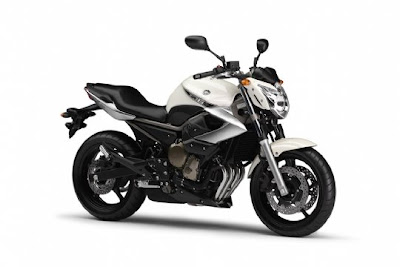
Yamaha FZ6 Fazer
Yamaha FZ6 Fazer

Kawasaki jumped in to the mid-sized game in 2006 with the ER-6. The ER was first introduced with a fairing in the United States, later the naked version sold in Europe became available, known as the ER-6n. Prior to the ER-6 Kawasaki offered the ZR750 in the United States, and in Europe today they offer a downsized version of the Z1000, known as the Z750.

Kawasaki ZR750Kawasaki Z750
Kawasaki ER-6n (Ninja 650R)

Ducati has had a mid-size bike since the introduction of the first Monster; the M600. The Monster went on to become one Ducati's most successful products of all time, and the smallest Monster was one of the best selling models. Over the years the baby Monster grew from 600 to 620, to 695, and finally with the next generation Monster the 696.

Ducati Monster 620

Triumph also had a a "mini-me" version of their bigger hooligan bike. Shortly after Triumph entered the 600cc supersport category the entered the mid-sized hooligan bike market with a naked version. The Speed Four attempted to offer the thrills of the Speed Triple with a smaller four cylinder power plant. In 2008 Triumph revisited this formula using the fresh triple from the 675 sport bike creating a nice little package called the Street Triple.

Triumph Speed FourTriumph Street Triple

Finally there's the South Korean upstart Hyosung. Hyosung has been trying to break into the US market with their 650R and S models. Esentially a copy of Suzuki's 650 V-twin design, the Hyosung tries to offer the performance of their Japanese rivals for less money.

One year of Motocyclopedia

Well it's been amost year since Motocyclopedia appeared on the Information Super Highway and it's been a fun trip so far. Ok, so I've slacked off the last few months, blame it on the winter months and me being lazy.  As the weather's getting warmer my mind floats back to bikes. So it's time to get back in the saddle and get back to what really matters, motorcycles.

Saturday, February 21, 2009

New standards part I

Somewhere in the 1990's standard bikes made a comeback. A new breed grew out of the street-fighter phenomena of the 1980's. Manufactures began capitalizing on this new trend with stripped down sport bikes of their own. Ducati broke new ground with with the Monster in 1993. Essentially a bare bones Super Sport went on to become the company's most successful model. Triumph, hot off the heals of the Hinckley revival, introduced the Speed Triple in 1994.

Ducati Monster 1993-

Triumph Speed Triple 1994-


The Japanese manufactures eventually came around and offered their own versions. Honda used the CBR900RR engine to create the 919 (Hornet 900 in Europe). Yamaha debuted the FZ1 with a detuned R1 engine. Kawasaki and Suzuki came late to the party, perhaps because they already had naked standards (the ZRX and Bandit, receptively) however they were more traditional and steel framed.

Yamaha FZ1 2001-
Honda 919 2000-
Kawasaki Z1000 2003-
Suzuki SV1000 2003-07


Both Honda and Suzuki had early answers to Ducati in the 1990's with semi-naked V-twins. Honda had the Nighthawk VTF1000, and Suzuki had the TL1000S.

Saturday, January 31, 2009

Motorsport of the Month: Bol d'Or


It's awefully hard to write about motorcycles in the winter months. Especially living on a mountain where I can snowboard for free. But I just can't let my site down, so here's a breif (and late) Motorsport of the Month for January.

The Bol d'Or is a very old and famous motorcycle endurance race held in France. The event first started in 1922, and the race has taken place in various places in France. Since 2000 Magny Cours has been home to the Bol d'Or. The race lasts 24 hours and teams consist of three riders whom switch off. SBK (Super Bike) bikes are the premier class that races.


Honda offers a Bol d'Or version of their CB1300.